

Auto Insurance Placentia California
Disasters arrive without notice. A falling object can damage a car, fire can destroy one, and losing control means hitting other vehicles or people. This car insurance guide sets out what answers each of those – and, more importantly, which of them your policy might not answer at all.
What Happens If You Have No Cover
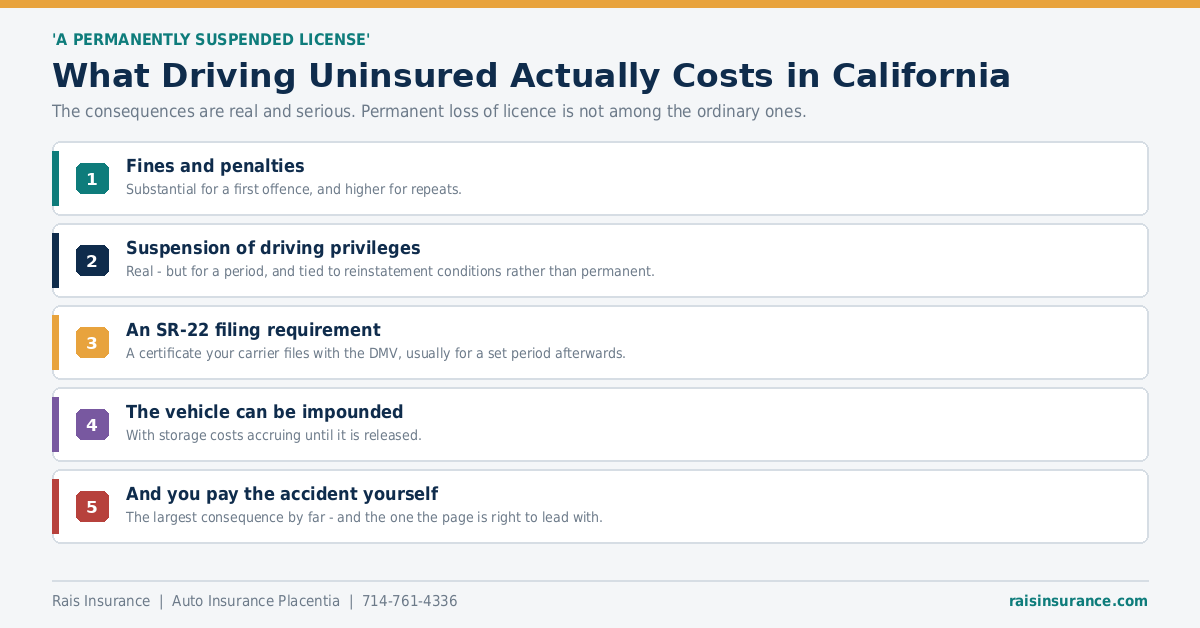
The original is right that this is serious, and right that a lawsuit is the largest exposure. The specific consequences in California:
- Fines and penalties, substantial for a first offence and higher for repeats.
- Suspension of driving privileges – real, though for a period with reinstatement conditions rather than permanent, as the original suggests.
- An SR-22 filing requirement afterwards in many cases: a certificate your carrier files with the DMV confirming you hold at least the required liability cover.
- The vehicle can be impounded, with storage costs accruing until it is released.
- And you pay for the accident yourself. That is by far the biggest of the five, and the page leads with it correctly.
The Two Coverages California Requires
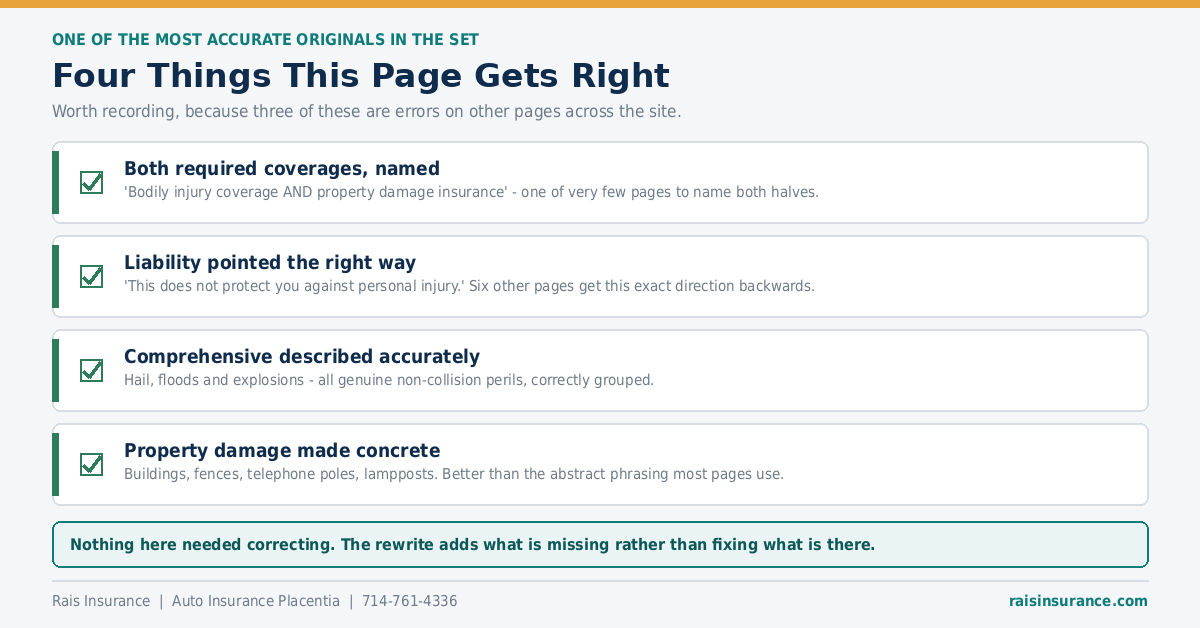
The original describes both auto insurance requirements accurately, and that is worth saying plainly because most pages manage one or neither:
- Bodily injury liability pays for treatment and rehabilitation of people you injure – and it does not protect you against your own injuries. The original states that explicitly, which is unusual and correct. See whose injuries each coverage pays for.
- Property damage liability pays for damage your vehicle causes to other people’s property: their car, but also buildings, fences, telephone poles and lampposts. That list is more concrete than most pages manage, and it is right.
The original also describes comprehensive correctly – damage from things other than collisions, with hail, floods and explosions given as examples. All three are genuine comprehensive perils: see what comprehensive coverage actually covers. How the two liability limits themselves work is on our how liability limits actually work page.
Who Each Coverage Actually Protects
Here is the pattern worth noticing. Sort the three car insurance coverages above by who receives the money, and something stands out:
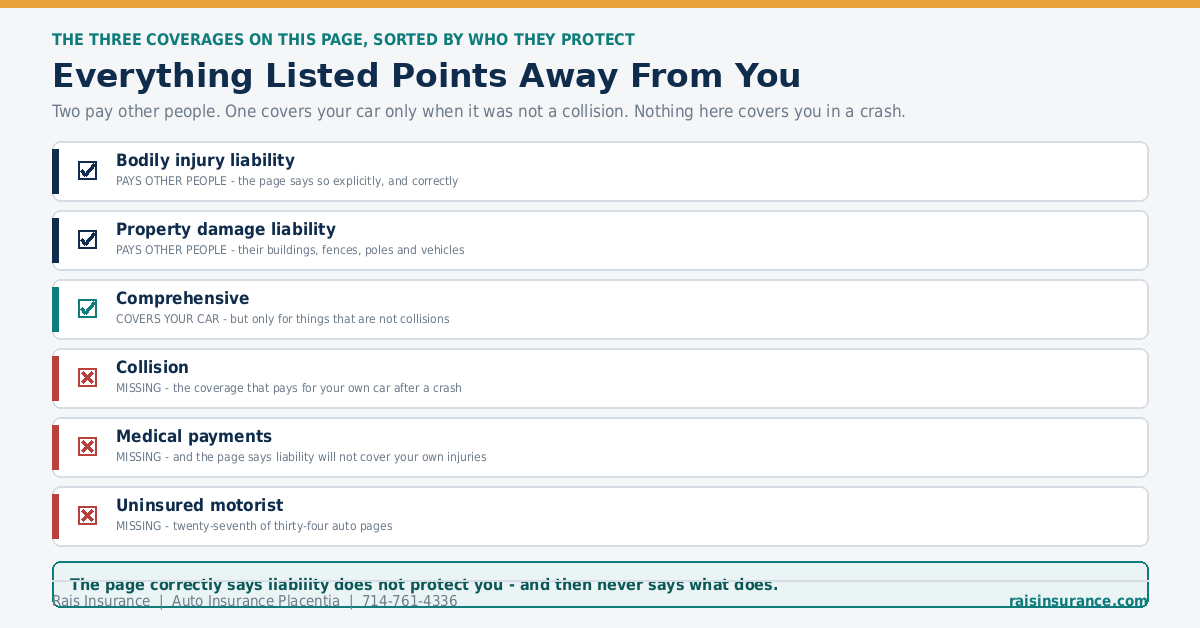
- Bodily injury liability – pays other people.
- Property damage liability – pays other people.
- Comprehensive – covers your car, but only for events that are not collisions.
So a driver holding exactly what is listed would meet California’s requirement, be covered for a fire or a hailstorm, and have nothing at all if they caused a crash themselves. The page correctly says liability will not cover your own injuries – and then never says what will.
The three that cover you
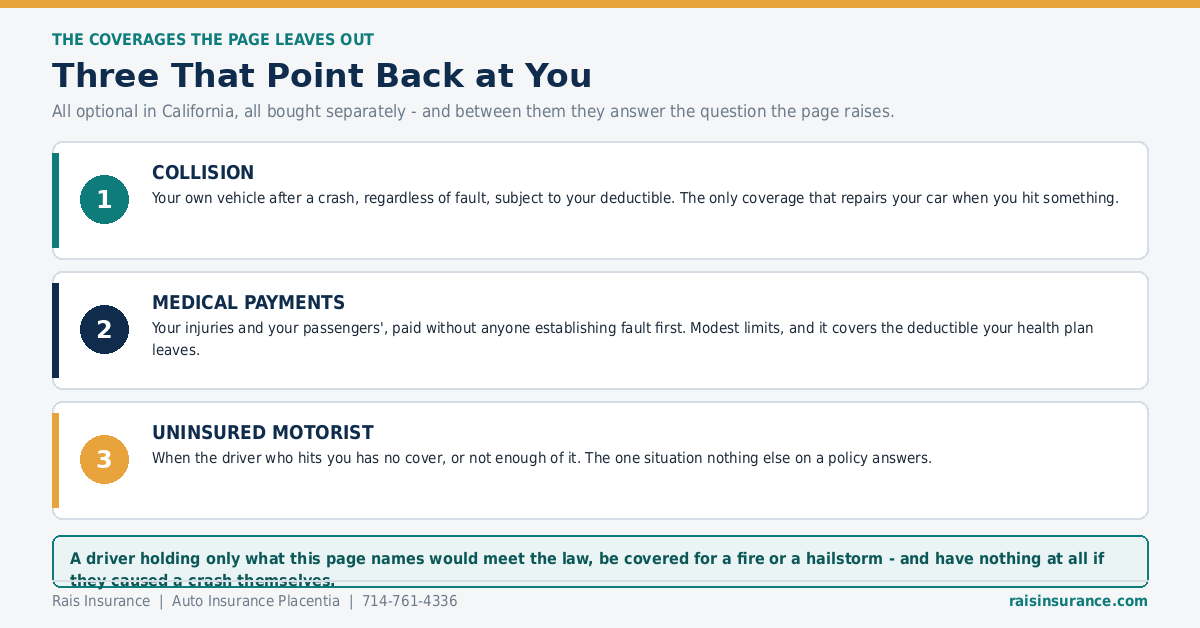
All optional auto insurance coverages, all bought separately, and between them they answer the question the original raises:
- Collision – your own vehicle after a crash, regardless of fault, subject to your deductible. It is the only coverage that repairs your car when you hit something. Whether it still earns its premium depends on the vehicle’s value: see when collision and comprehensive stop earning their premium.
- Medical payments – your injuries and your passengers’, paid without anyone establishing fault first. Modest limits, inexpensive, and it covers the deductible your health plan leaves with you.
- Uninsured and underinsured motorist – when the driver who hits you has no cover, or not enough of it. A carrier must obtain your decline in writing, so it is checkable on your declarations page. In a fault-based state it is the one gap nothing else answers.
A useful test on the original’s own example: hit a telephone pole, and two coverages are involved. The pole is somebody else’s property, so property damage liability answers that. Your own car is a collision claim – and collision is optional.
Working Out What You Need
The original’s point about the sheer volume of information is fair – it is genuinely hard to tell which policy fits from the outside, and that is most of what a broker is for. The practical version is four car insurance decisions: your liability limits, which optional coverages you carry, what deductible you set on each, and which carrier writes the policy.
As an independent broker we place business across a panel of carriers rather than selling one company’s products, so one set of details gets quoted several times – see the insurance companies we represent. We are not an insurance company; the carrier issues the policy and pays the claim, and there is no fee to you for the comparison. The current minimum limits are on our auto insurance in California page.
We also place home, boat, life and health cover, and bundling more than one policy is usually the single largest reduction available on a personal auto premium.
Driving in Placentia
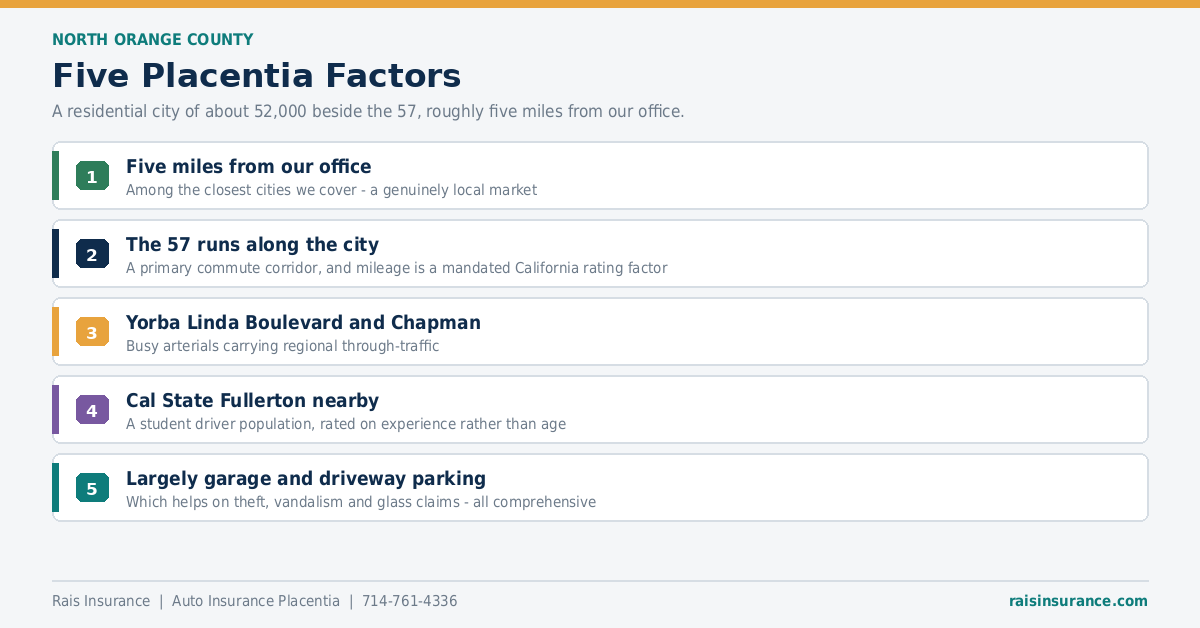
Five things that shape car insurance Placentia rates specifically, on top of the auto insurance Placentia basics above:
- About five miles from our office – one of the closest cities we cover, and a genuinely local market rather than one served remotely.
- The 57 runs along the city, a primary commute corridor, and annual mileage is one of the three factors California law requires to weigh most heavily.
- Yorba Linda Boulevard and Chapman Avenue, busy arterials carrying regional through-traffic.
- Cal State Fullerton nearby, and a student driver population that rates on experience rather than age.
- Largely garage and driveway parking, which helps on theft, vandalism and glass claims.
Auto Insurance in Placentia – Frequently Asked Questions
Q1. Does liability insurance cover my own injuries?
No, and the original version of this page states that correctly. Bodily injury liability pays for treatment and rehabilitation of the people you injure – it never pays the policyholder. Your own injuries need medical payments coverage, your health plan, the at-fault driver’s liability if they caused it, or your own uninsured motorist cover.
Q2. What covers my own car if I cause the accident?
Collision coverage, which pays for damage to your vehicle regardless of who was at fault, subject to your deductible. It is optional in California and it is missing from the original version of this page – which means a driver holding only what is listed here would have nothing at all if they caused a crash themselves.
Q3. What is medical payments coverage?
An optional coverage inside your auto policy that pays medical costs for you and your passengers without anyone having to establish fault first. The limits are modest and it is inexpensive. It also covers the deductible and copays your health plan leaves with you, which is often the gap people actually feel.
Q4. What is uninsured motorist coverage?
It responds when the driver who hits you has no insurance at all, and underinsured motorist handles the case where they have some but not enough. Both are optional in California and a carrier must obtain your decline in writing. In a fault-based state it is the one situation nothing else on your policy answers.
Q5. What does California actually require?
Two coverages: bodily injury liability and property damage liability. The original version of this page names both, which is worth noting because most pages name only one or neither. Everything else – collision, comprehensive, medical payments, uninsured and underinsured motorist – is optional.
Q6. What happens if I drive without insurance in California?
Fines, which are substantial for a first offence and higher for repeats; suspension of driving privileges; often an SR-22 filing requirement afterwards; and the vehicle can be impounded with storage costs accruing. The largest consequence is the one the page leads with: you pay for the accident yourself. Suspension is for a period with reinstatement conditions rather than permanent.
Q7. What does comprehensive coverage include?
Damage that does not come from a collision – and the original names hail, floods and explosions, all of which are correct. It also covers theft, fire, vandalism, falling objects and animal strikes. It is optional and carries its own deductible, separate from collision.
Q8. What does property damage liability cover?
Damage your vehicle causes to other people’s property – their car, but also buildings, fences, telephone poles and lampposts. The original’s list is unusually concrete and it is accurate. What it does not cover is your own vehicle or your own property.
Q9. If I hit a telephone pole, what pays?
Two different coverages, depending on what is being repaired. The pole belongs to somebody else, so property damage liability answers that. Your own vehicle is a collision claim – which is optional cover, so a liability-only policy would leave you paying for your own car.
Q10. How do I get a Placentia auto insurance quote?
Call Rais Insurance on 714-761-4336 or email rai@raisinsurance.com. Our office is in Anaheim, about five miles away, which makes Placentia one of the closest cities we cover. We are an independent broker, so one set of details is quoted across several carriers, and there is no fee to you for the comparison.
Get a Car Insurance Quote in Placentia
contact Rais Insurance on (714) 761-4336 or email rai@raisinsurance.com for a free quote.
When you call, have your car insurance declarations page to hand and check one thing on it first: whether you carry collision. It is the coverage most often missing from a policy that otherwise looks complete, and it is the one that matters on the day you cause the accident rather than suffer one.
