

Auto Insurance Los Angeles California
That is the useful thing to understand before you compare car insurance quotes here, and it is worth starting with.
Los Angeles Is Not One Rating Territory
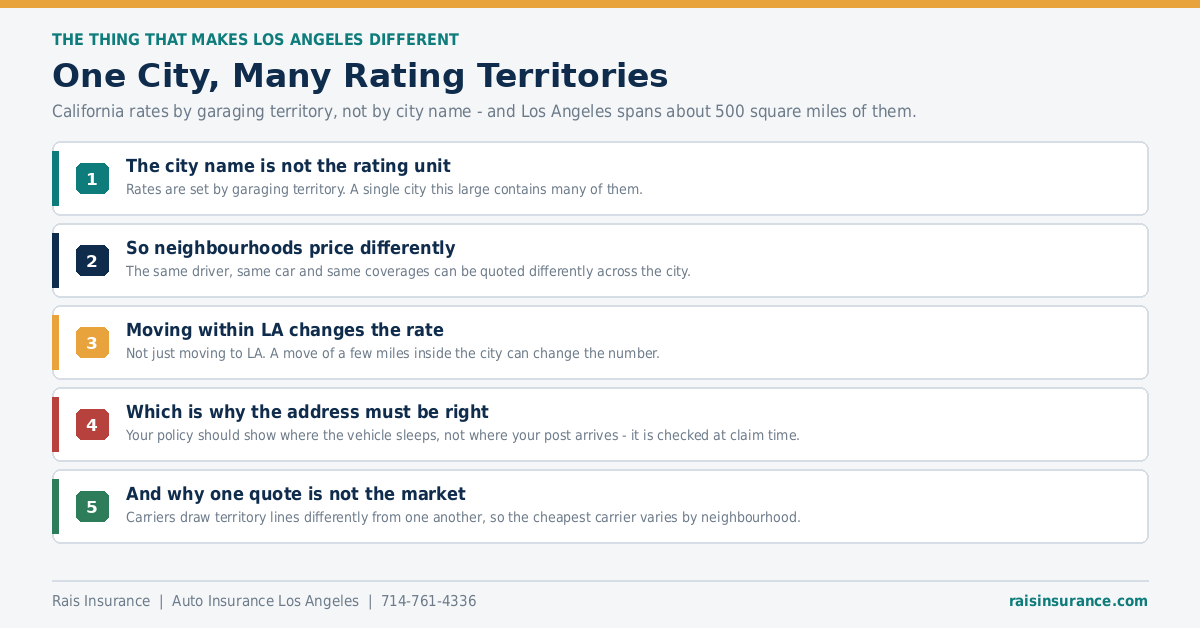
California rates car insurance by garaging territory – where the vehicle is kept overnight – rather than by city name. Most cities in this county sit inside one territory. Los Angeles spans about five hundred square miles and contains many:
- The city name is not the rating unit. A quote is built on the ZIP where the car sleeps, and this city has well over a hundred of them.
- So neighbourhoods price differently. The same driver, the same car and the same coverages can be quoted differently across the city.
- Moving within Los Angeles changes the rate, not just moving to it. People expect a move between cities to matter and are often surprised that a move across town does too – see what changes when you move.
- Which is why the address on the policy has to be right. It should show where the vehicle actually sits overnight, because that is what the rate was built on and what gets checked at claim time.
- And why one quote is not the market. Carriers draw territory boundaries differently from one another, so the cheapest carrier genuinely varies by neighbourhood.
What drives a California premium generally – and the three factors state law requires to weigh most heavily – is on our what determines your premium in California page.
The Coverages, Corrected
The original version of this page describes three auto insurance coverages. Each needs a small correction, and two of them are the kind that change what a reader would buy.
Collision – it pays for your car, not theirs
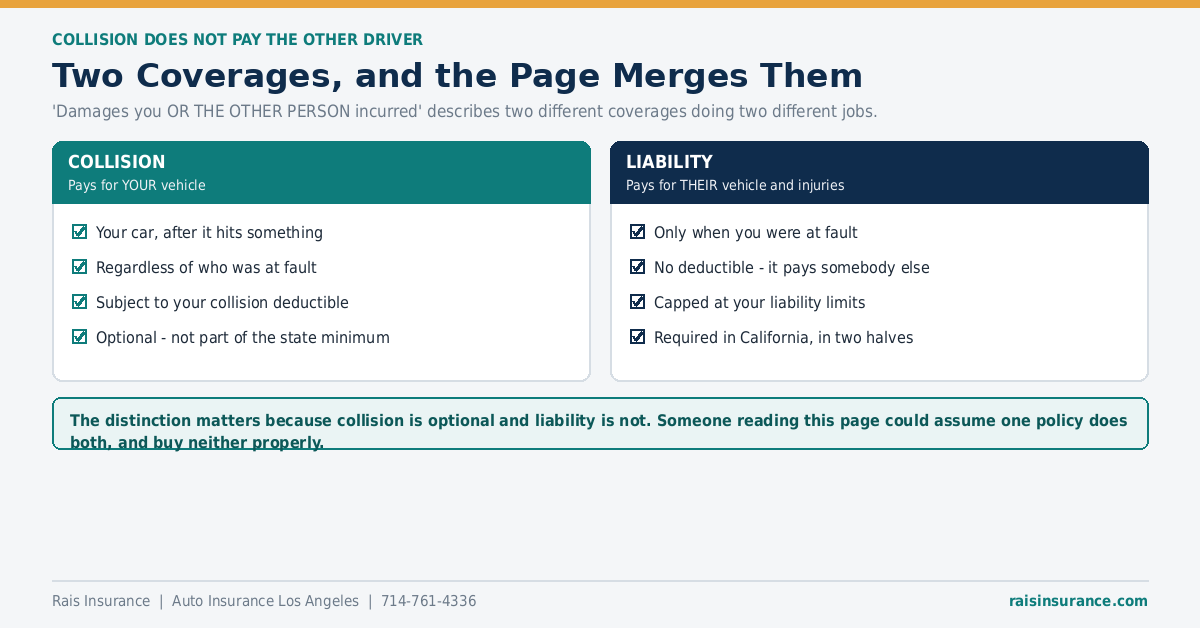
The page says collision will help pay for damages “you or the other person” incurred. It does not. Collision covers your own vehicle, after it hits something, regardless of fault and subject to your deductible. Damage to the other person’s car is property damage liability, and only where you were at fault.
The distinction matters because collision is optional and liability is required. Someone reading the original could reasonably assume one coverage does both jobs – and buy neither properly.
Property damage liability – and the word to remove
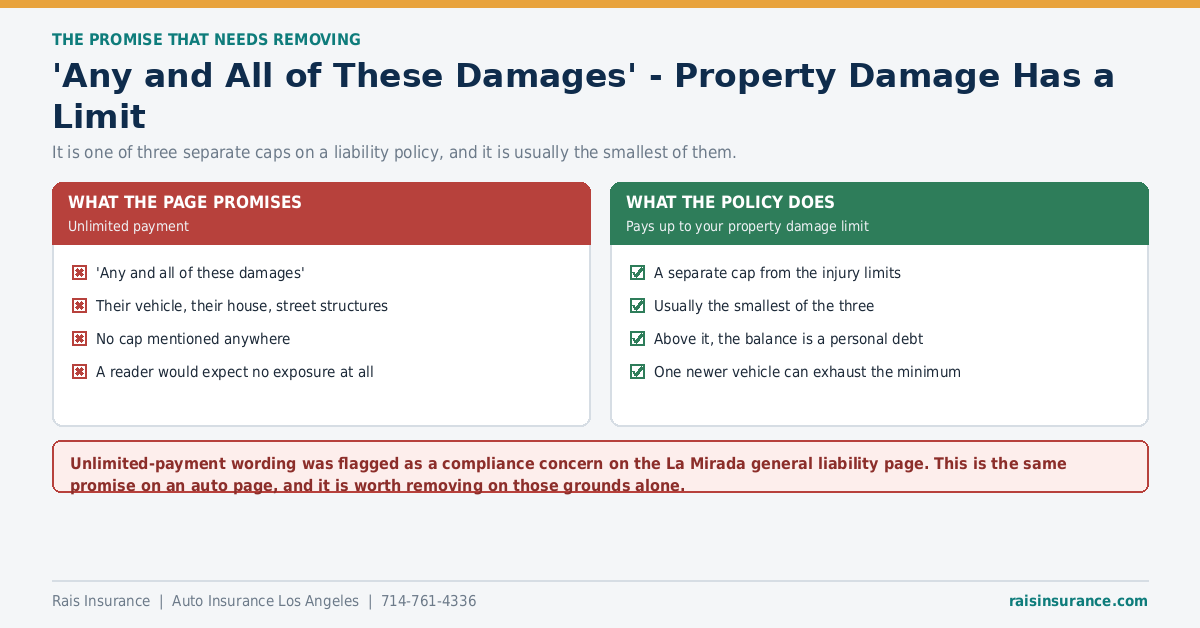
The page describes this well otherwise: damage to somebody else’s vehicle, house, or structures along their street. But it says you will be able to pay off “any and all” of those damages, and that is not what a policy does:
- Property damage liability is capped at the limit on your policy.
- It is one of three separate caps – the other two apply to injuries – and it is usually the smallest of the three.
- A single newer vehicle can exhaust the state minimum on its own, before anything else is damaged.
- Above the limit, the balance is yours, and reachable as a personal debt: see how liability limits actually work.
Comprehensive – and one qualification
The original is right that theft and vandalism are the sorts of thing comprehensive answers, and right that they are not traffic events. Two small refinements: it also covers fire, weather, falling objects and animal strikes – and it does not pay for “any” damage, since a deductible applies and the payout is capped at the vehicle’s actual cash value. See what comprehensive coverage actually covers.
What the List Leaves Out
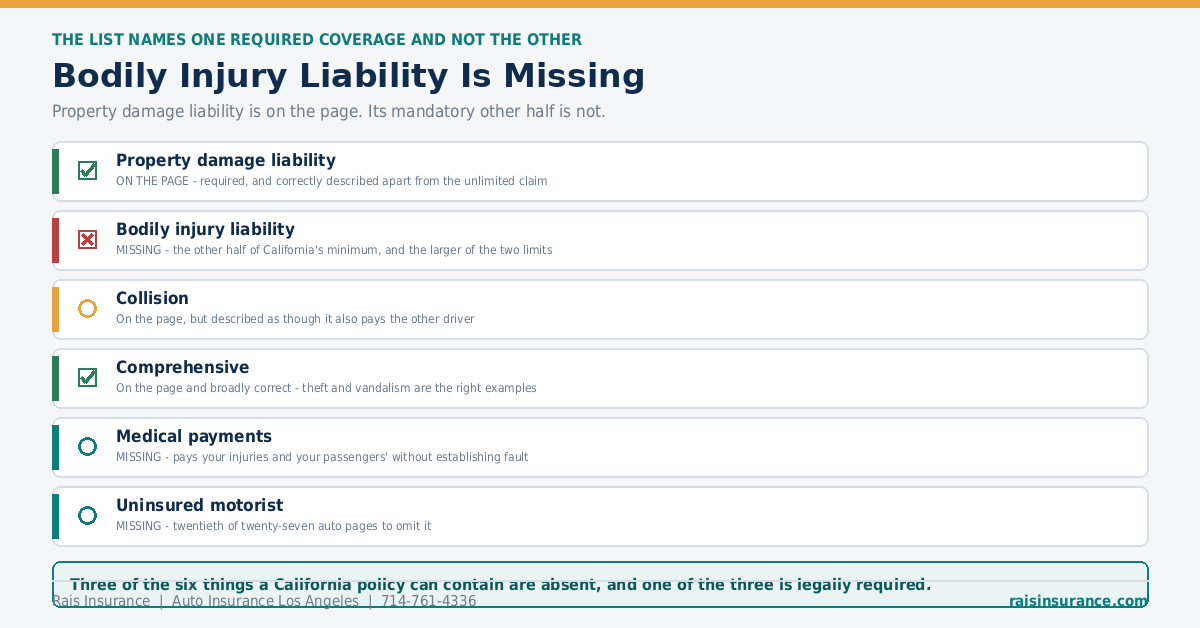
Three auto insurance coverages are missing, and one of them is legally required:
- Bodily injury liability – the other half of California’s minimum, and the larger of the two limits. It pays for injuries you cause to other people. The page names property damage liability and not this.
- Medical payments – optional, and it pays medical costs for you and your passengers without anyone having to establish fault first.
- Uninsured and underinsured motorist – optional, declined in writing, and the only thing that responds when the at-fault driver has no insurance or not enough of it.
The full list and the current minimum limits are on our auto insurance in California page.
One small note on framing: the original heads this section “different types of plans you can invest in“. Insurance is a risk transfer rather than an investment – you pay a known amount so that an unknown one never lands on you.
Driving in Los Angeles
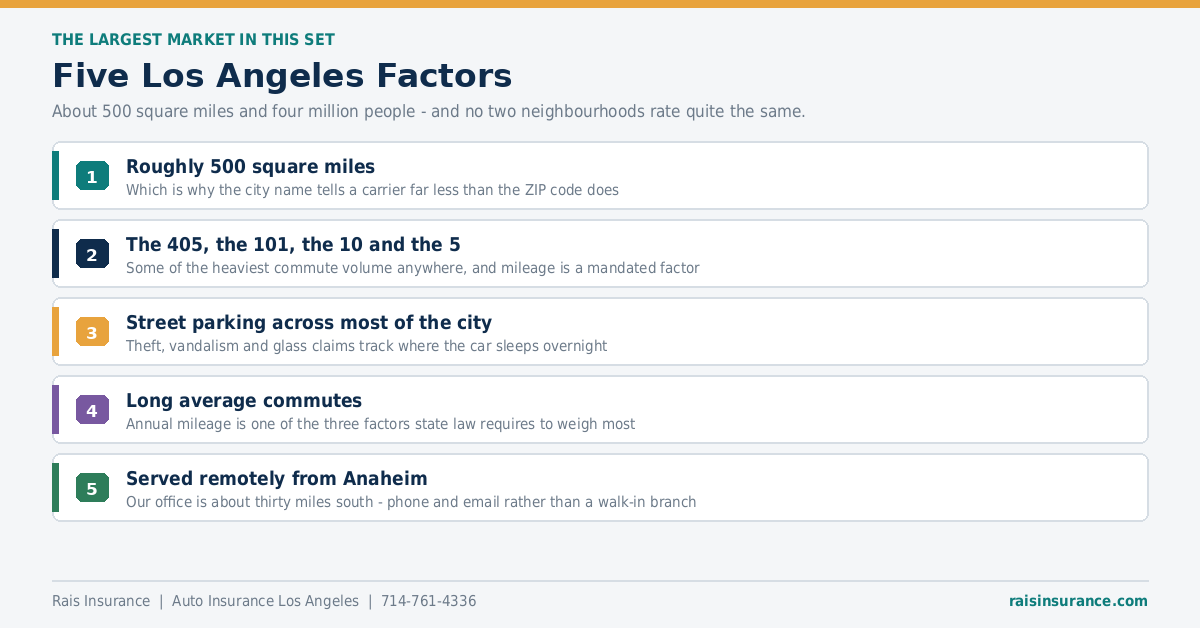
Five things that shape car insurance Los Angeles rates specifically, on top of the auto insurance Los Angeles basics above:
- Roughly five hundred square miles, which is why the ZIP code tells a carrier far more than the city name does.
- The 405, the 101, the 10 and the 5. Some of the heaviest commute volume anywhere in the country.
- Street parking across much of the city, which drives theft, vandalism and glass claims – all comprehensive.
- Long average commutes, and annual mileage is one of the three factors California law requires to weigh most heavily.
- We serve Los Angeles remotely. Our office is in Anaheim, about thirty miles south, so this is a phone and email relationship rather than a walk-in one.
Making the Process Easier
The original’s promise is a reasonable one – that the process should be painless, particularly if you are settling into a new city and have plenty else to organise. What that means practically is doing the car insurance comparison work rather than handing you a list of carriers to ring.
As an independent broker we place business across a panel of carriers rather than selling one company’s products, so one set of details gets quoted several times – see the insurance companies we represent. That matters more in Los Angeles than almost anywhere, because carriers draw territory lines differently and the cheapest one genuinely varies by neighbourhood. We are not an insurance company; the carrier issues the policy and pays the claim, and there is no fee to you for the comparison.
Auto Insurance in Los Angeles – Frequently Asked Questions
Q1. Does my ZIP code affect my car insurance in Los Angeles?
Yes, and more than most people expect. California allows rating by garaging territory – where the vehicle is kept overnight – and Los Angeles spans roughly 500 square miles containing many territories. The same driver with the same car and the same coverages can be quoted differently in different parts of the city.
Q2. Does moving within Los Angeles change my rate?
It can, even over a few miles. People expect a move between cities to matter and are often surprised that a move across town does too. It is worth telling your broker before the move rather than after, because the garaging address on your policy should be where the car actually sleeps.
Q3. Why does my neighbour pay less than I do?
Usually the driving record, the annual mileage or the vehicle – those are the three factors California law requires to weigh most heavily. But territory matters too, and in a city this large a few streets can sit in different rating territories. Carriers also draw those lines differently from one another, which is why the cheapest carrier varies by neighbourhood.
Q4. Does collision coverage pay for the other driver’s car?
No. Collision pays for your own vehicle after it hits something, regardless of fault and subject to your deductible. Damage to the other person’s car is covered by your property damage liability, and only when you were at fault. They are separate coverages – collision is optional, liability is required.
Q5. Is property damage liability unlimited?
No. It is capped at the limit on your policy, and it is one of three separate caps – the other two apply to injuries. Property damage is usually the smallest of the three, and a single newer vehicle can exhaust the state minimum on its own. Anything above the limit is a personal debt.
Q6. What car insurance is required in Los Angeles?
The same as everywhere in California: bodily injury liability and property damage liability. Everything else – collision, comprehensive, medical payments, uninsured and underinsured motorist – is optional, though a lender will usually require collision and comprehensive while a vehicle is financed.
Q7. What does comprehensive cover in a city like this?
Theft, vandalism, fire, weather, falling objects and animal strikes – damage that does not come from your vehicle hitting something. In Los Angeles it matters particularly because so much of the city parks on the street, and theft and break-in exposure tracks where the car sits overnight.
Q8. Do I need uninsured motorist coverage?
It is optional in California and a carrier must obtain your decline in writing. It responds when the at-fault driver has no insurance, or not enough of it – the one situation nothing else on your policy answers, since what you recover otherwise depends entirely on their limits.
Q9. Are you based in Los Angeles?
No. Our office is at 2612 W. Lincoln Avenue, Suite 103, Anaheim, CA 92801, about thirty miles south, and we place business across Los Angeles by phone and email rather than across a desk. For a city this size that works well – the quoting is the same wherever the conversation happens.
Q10. How do I get a Los Angeles auto insurance quote?
Call Rais Insurance on 714-761-4336 or email rai@raisinsurance.com. Have the garaging ZIP code to hand along with your declarations page – in this city the ZIP is the single detail most likely to move the number. We are an independent broker, so one set of details is quoted across several carriers.
Get a Car Insurance Quote in Los Angeles
contact Rais Insurance on 714-761-4336 or email rai@raisinsurance.com.
Have the garaging ZIP code ready along with your car insurance declarations page. In a city this size it is the single detail most likely to move the number – and if you have recently moved within Los Angeles, say so, because it changes the quote rather than being an administrative update afterwards.
